

When it comes to changing your bicycle cassette, checking its compatibility with the entire drivetrain is essential. This question particularly arises when choosing between Shimano and SRAM: their models may look similar, but in practice, mounting standards and functionality can differ.
For regular use in Paris, where bikes are often heavily used and loaded, the choice of cassette becomes even more important. An error at this stage can lead to imprecise gear changes, accelerated chain wear, and the appearance of noises while riding, and sometimes even make mounting on the wheel impossible if the cassette is not compatible with the freehub body.
This article was prepared in collaboration with the specialists at the Routes and Roads workshop, who have extensive experience with drivetrains from various brands, including Shimano and SRAM. Their expertise allows them to quickly identify component compatibilities and perform precise interventions without wasting time.
Table of Contents:
Cassette and its function: quick explanation
Types of freehub bodies
Number of speeds and cog spacing
Gear range and cog sizes
Compatibility between generations of components
Conclusion
Cassette and its function: quick explanation
The cassette is a set of cogs mounted on the rear wheel. The chain moves across these cogs during gear changes. The cassette attaches to the freehub body of the rear hub, which is the part it slots onto and locks into, and it is precisely this standard that determines its compatibility with the hub.
While riding, the rear derailleur moves the chain from one cog to another. The larger the cog, the easier pedaling is, for example, on climbs. Conversely, a smaller cog allows for faster riding on flat terrain.

Proper cassette function is essential for comfortable pedaling
But the cassette never works alone: it constantly interacts with the chain and the rear derailleur. As soon as one of these elements is not perfectly adapted, gears shift less smoothly, noises or jerks appear, and wear accelerates.
Shimano and SRAM are the main drivetrain manufacturers, and most modern bikes are equipped with their systems. However, despite obvious similarities, their cassettes present significant differences that directly influence mounting and compatibility.
Let's review the key points to know to avoid errors and facilitate the choice of a cassette suitable for your bike.
Types of freehub bodies
One of the main differences between Shimano and SRAM cassettes concerns their mounting method on the rear hub, in other words, the type of freehub body. In case of incompatibility, the cassette simply cannot be mounted. The most common standards are Shimano HyperGlide, Shimano MicroSpline, as well as SRAM XD and XDR standards.
Shimano HyperGlide (HG) Standard
This is the most common standard on urban, road, and gravel bikes. Most Shimano cassettes, as well as some SRAM ones, mount on an HG body.

Shimano HyperGlide Cassette
Shimano MicroSpline Standard
This modern Shimano standard equips new wide-range drivetrains, particularly on mountain bikes and some gravel bikes. These cassettes are not compatible with a classic HG body without replacing the freehub body.

Shimano MicroSpline Standard
SRAM XD and XDR Standards
These standards are designed for the brand's modern drivetrains, especially those offering a wide range of gears. XD is mainly used in mountain biking, while XDR is for road and gravel. From a technical perspective, XDR is 1.85 mm longer than XD: it is a "road" version, on which it is possible to mount an XD cassette using a 1.85 mm spacer.
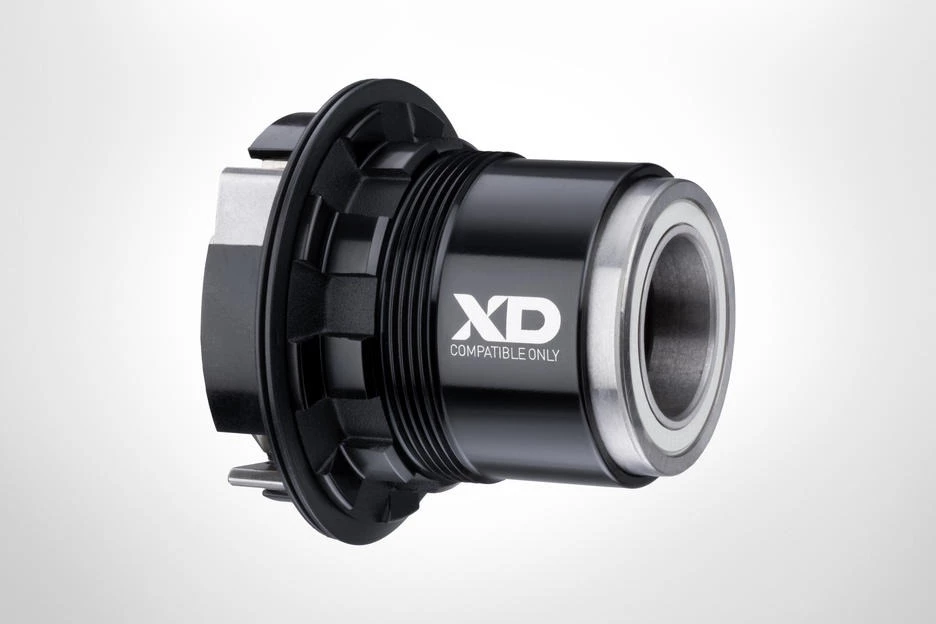 SRAM XD and XDR Standards
On many urban and gravel bikes used in Paris and its surroundings, a standard HG body is still found, compatible with many Shimano and SRAM cassettes. However, newer bikes may be equipped with MicroSpline or XD/XDR bodies, which implies a different choice of cassettes.
Number of speeds and cog spacing
Another key point: the number of speeds. Shimano and SRAM use different cog spacings depending on the number of gears.
For example, a 10-speed cassette has wider gaps between the cogs than an 11 or 12-speed cassette. Thus, even if a cassette physically mounts on the freehub body, it may not function well with an unsuitable drivetrain.
When choosing a new cassette, it is necessary to consider:
- the number of speeds;
- the installed derailleur;
- the type of chain used.

An incompatible number of speeds leads to imprecise gear changes
The first point to check is the number of speeds of the drivetrain. This information is generally indicated on the rear derailleur or in the bike's specifications. For example, for a 9-speed drivetrain, you must choose a 9-speed cassette. Mounting a cassette designed for a different number of gears almost always results in imprecise gear changes.
Gear range and cog sizes
Shimano and SRAM take different approaches to gear range, i.e., the size of the smallest and largest cogs on the cassette. Even if a cassette is compatible in terms of speeds and freehub body, a cog that is too large can exceed the capacity of the rear derailleur. In this case, shifting becomes difficult, if not impossible.
The cassette marking makes it easy to understand: for example, 11–32, 11–42, or 10–52. The first number corresponds to the smallest cog and affects speed on flat terrain. The second indicates the largest cog and determines ease on climbs.
Before choosing, make sure the rear derailleur is compatible with this range. Two parameters must be considered. The first is the maximum size of the largest allowable cog. The second is the total capacity of the derailleur, i.e., its ability to absorb the difference in chain length between the extreme chainring and cog combinations. You then simply compare these values with those of the planned cassette.

Shimano GRX RX820 1x12 Cassette with MicroSpline Standard
The simplest way is often to remove the wheel and read the indications inscribed on the existing cassette: brand, model, and cog range. This information makes it easy to choose an equivalent cassette.
If the marking is illegible or if the bike has been modified, it is better to directly check the derailleur's specifications. Each model has a maximum cog range to respect.
Compatibility between generations of components
Another difference concerns compatibility between different generations of components within each brand. Shimano generally aims to maintain some compatibility between several generations of drivetrains. It is thus sometimes possible to use a newer cassette with older components.
With SRAM, compatibility more often depends on the series and the type of freehub body. Some modern drivetrains impose stricter standards. For example, many SRAM Eagle cassettes with a 10-tooth cog require an XD body, while SRAM X-Range road and gravel cassettes, including those designed for the XDR standard, require an XDR body.

Installing a cassette without considering component generation can lead to imprecise gear changes
Conclusion
With a bike used regularly in the city, the choice of cassette should leave nothing to chance. Incompatibility quickly leads to noises, premature chain wear, and repeated component replacements.
In case of doubt, it is best to entrust your bike's maintenance to a specialized workshop. The mechanics at Routes and Roads work daily with Shimano and SRAM drivetrains and can quickly identify compatible components: from the type of freehub body to the number of speeds, including the cassette range and derailleur adjustment, to ensure smooth and silent gear changes from the very first ride.


